

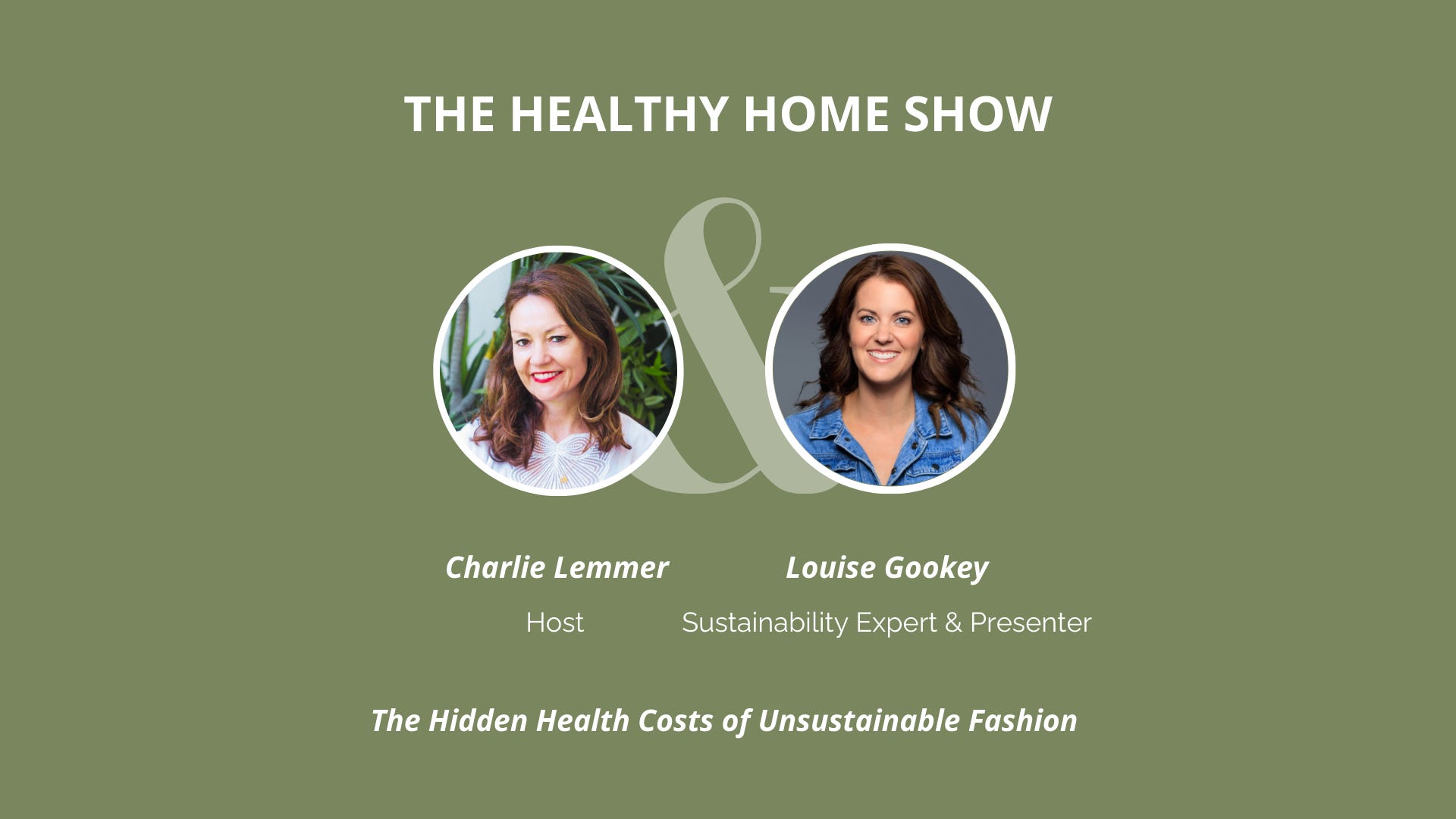

This week on The Healthy Home Show, I sat down with presenter and sustainability advocate Louise Gookey to dig into a topic that touches all of us: the hidden health and environmental impact of fashion and consumer choices in our homes.
It turns out that what we wear, clean with, and throw away is quietly shaping not just our planet’s future but our hormones, our wellbeing, and even our stress levels.
Listen to the full podcast episode – Spotify
Listen to the full episode – Apple Podcasts
The Problem with Fast Fashion
-
Two-thirds of the clothes produced worldwide contain plastic in the form of polyester and other synthetics. Every wash releases microplastics into waterways, which end up back in our food and drinking water.
-
A single polyester t-shirt can take 200 years to decompose in landfill—yet it never really “disappears,” only breaking down into microplastics.
-
Only 9% of what we send for recycling is actually recycled. Much of our discarded clothing ends up shipped to poorer countries, where communities are forced to deal with our waste.
-
Fashion production is accelerating. Instead of two or four seasons a year, some brands now release new lines 12+ times a year, fuelling a throwaway culture where clothing is designed not to last.
And it isn’t just the environment paying the price. Our health is on the line too. Toxic dyes and flame retardants used in textiles are linked to eczema, asthma, allergic reactions, hormone disruption, and even cancers. Research has even found lead in baby clothes from some fast-fashion brands.
The Hidden Toxins in Everyday Products
The issue doesn’t stop at fashion:
-
Cotton farming is one of the most water-intensive industries on the planet. A single pair of jeans can require up to 10,000 litres of water to produce, often in regions already facing water scarcity.
-
Sanitary products (tampons, pads) often contain glyphosate, plastics, and polyester threads—chemicals that can disrupt hormones when used in one of the body’s most delicate areas.
-
Household cleaners and beauty products are marketed to us as needing a different bottle for every surface or skin area. In reality, most of these are unnecessary—and many contain harsh chemicals that linger in our indoor air.
Smarter Swaps That Make a Difference
Louise reminded us that the simplest actions can be the most powerful. Here are a few to start with:
-
Turn off the tap of overconsumption. Before buying, check what you already own—you might rediscover forgotten treasures at the back of the wardrobe or cupboard.
-
Buy less, buy better. Choose organic cotton, natural fabrics, or second-hand. Look for certifications like GOTS (Global Organic Textile Standard), Soil Association, or B Corp.
-
Repair instead of replace. Learning to sew on a button or mend a hem reduces waste and saves money.
-
Swap plastics in the kitchen. Replace cling film with beeswax wraps, plastic Tupperware with glass, and skip heating food in plastic containers.
-
Simplify your products. One non-toxic multipurpose cleaner can replace a cupboard full of bottles. In skincare, one organic oil can replace five separate creams.
-
Choose reusable period products. Moon cups and period pants may feel like an investment at first, but they save hundreds of pounds over time and drastically cut waste.
Key Takeaways
-
Clothes = plastics. Two-thirds of garments contain synthetics that shed microplastics and harm health.
-
Waste is a global injustice. Only 9% of recycling happens; much of our waste is shipped overseas.
-
Health is directly impacted. From endocrine-disrupting dyes to glyphosate in tampons, toxins are in everyday items.
-
Consumerism is the trap. We don’t need more “stuff”—we need mindful, slower choices.
-
Small swaps matter. Multipurpose cleaners, organic fabrics, and reusable products reduce toxins and save money long-term.
Closing Thought
As Louise put it so simply: “Just turn the tap off.”
Before rushing to buy the next eco-product, pause. Look around your home. Can you repair, reuse, or repurpose first? Sustainability isn’t about perfection—it’s about slowing down, consuming less, and making conscious choices that protect our health as much as our planet.
Where to Follow Louise Gookey and her work……
Louise’s Website – www.louisegookey.co.uk
If you enjoyed hearing Louise’s insights on the importance of Healthy and Sustainable Fashion…. You can learn more and dive into all of my 12 main concepts that create a Healthy Home and Lifestyle on my website – www.charlielemmer.com
Please leave a review for the show, if you are so inclined. It really helps me understand where to guide the content next or you can just give a rating. And, if you prefer to watch your content on Youtube, we have that covered too!
Be WELL
Charlie x

0 Comments